Top 5 Credit Cards in India 2026: Best Picks Compared
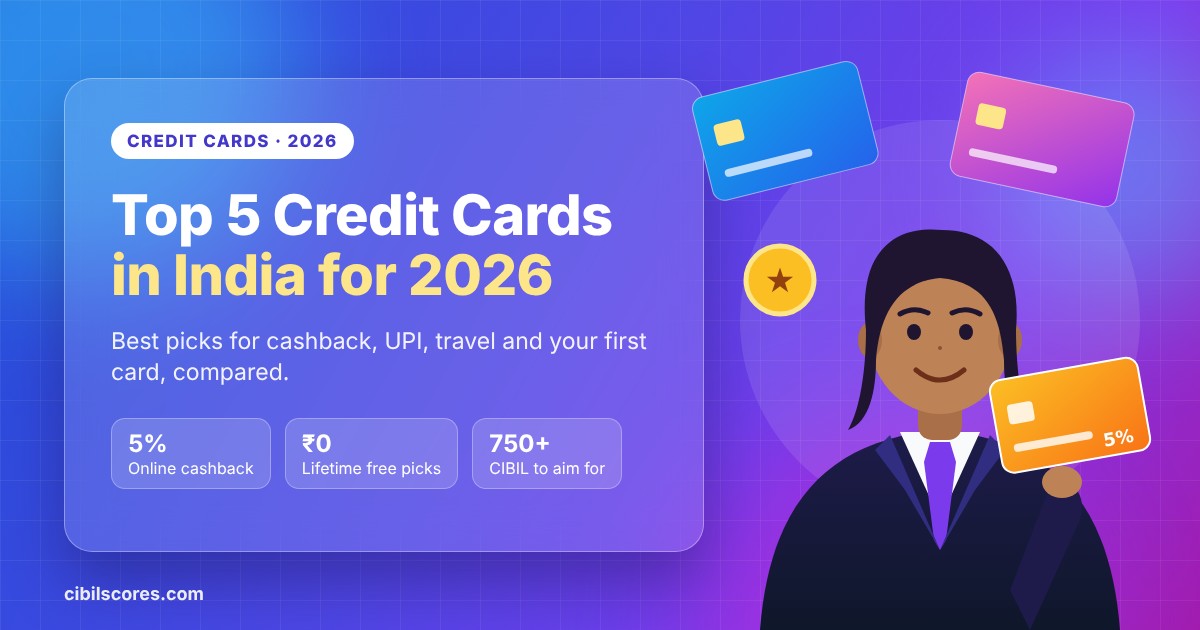
Quick answer: The top 5 credit cards in India for 2026 are the SBI Cashback Card (best for online shopping), Amazon Pay ICICI Card (best lifetime-free card for Amazon shoppers), Tata Neu Infinity HDFC Card (best for UPI and Tata brands), HDFC Regalia Gold (best premium travel and lifestyle card) and IDFC FIRST Millennia (best first card for beginners). The right one depends on where you spend most, and a CIBIL score of 750+ gives you the best chance of approval.
Top 5 credit cards in India 2026 at a glance
| Card | Best for | Annual fee | Key reward |
|---|---|---|---|
| SBI Cashback | Online shopping | ₹999 + GST (waived at ₹2 lakh spend) | 5% cashback online |
| Amazon Pay ICICI | Amazon shoppers | Lifetime free | Up to 5% on Amazon (Prime) |
| Tata Neu Infinity HDFC | UPI & Tata brands | ₹1,499 + GST (waived at ₹3 lakh spend) | 5% NeuCoins on Tata brands |
| HDFC Regalia Gold | Travel & lifestyle | ₹2,500 + GST (waived at ₹4 lakh spend) | Up to 10X points via SmartBuy |
| IDFC FIRST Millennia | First-time users | Lifetime free | 10X points on dining, travel & birthday |
Fees and rewards checked in October 2026. Banks revise card terms often, so confirm the latest details on the bank's website before applying.
1. SBI Cashback Card: best for online shopping
If most of your spending happens online, this is still one of the simplest cards to use. You get cashback directly on your statement, with no points to track.
- Fee: ₹999 + GST a year, waived if you spend ₹2 lakh in a year.
- Rewards: 5% cashback on eligible online spends (capped at ₹2,000 per statement cycle) and 1% on offline spends (capped at ₹2,000).
- Watch out for: since April 2026, rent, fuel, wallet loads, utilities, insurance, education, jewellery, railway bookings and EMI transactions don't earn cashback. There's no lounge access.
Best for: people who spend ₹10,000–₹40,000 a month across many online shopping, food and travel apps.
2. Amazon Pay ICICI Card: best lifetime-free card for Amazon shoppers
This card has no joining or annual fee for life, which makes it a great low-risk card to keep for years. A longer-held card also helps your credit history.
- Fee: Nil, lifetime free.
- Rewards: 5% back on Amazon.in for Prime members (3% for non-Prime), 2% on Amazon Pay partner merchants and 1% on other spends. Rewards don't expire and go straight to your Amazon Pay balance.
- Extras: 1% fuel surcharge waiver, a lower 1.99% forex mark-up and no-cost EMI on eligible Amazon purchases.
- Watch out for: ICICI currently issues it on an invite-only basis, so check eligibility in your Amazon app.
Best for: regular Amazon shoppers who want a no-fee card.
3. Tata Neu Infinity HDFC Card: best for UPI and Tata brands
The RuPay version of this card can be linked to UPI, so you can earn rewards on everyday QR code payments.
- Fee: ₹1,499 + GST a year, waived if you spend ₹3 lakh in a year.
- Rewards: 5% NeuCoins on Tata brands such as BigBasket, Croma, Westside, Tata 1mg and Air India, and 1.5% on other eligible spends. 1 NeuCoin = ₹1 on the Tata Neu app.
- UPI: 1.5% NeuCoins on UPI payments through the Tata Neu app, capped at 500 NeuCoins a month.
- Extras: 8 domestic and 4 international lounge visits a year.
- Watch out for: NeuCoins can only be used within the Tata ecosystem and expire after 12 months.
Best for: families who already buy groceries, electronics or medicines from Tata brands.
4. HDFC Regalia Gold: best premium travel and lifestyle card
A popular step up from entry-level cards for people who travel a few times a year.
- Fee: ₹2,500 + GST a year, waived if you spend ₹4 lakh in a year.
- Rewards: about 1.25% back on regular spends, rising to 5X–10X points on flights and hotels booked through HDFC SmartBuy, and 5X on partner brands such as Myntra, Nykaa and Reliance Digital.
- Lounge access: 6 international visits a year through Priority Pass. Domestic lounge access now requires ₹60,000 of spending in the previous quarter.
- Watch out for: you get the most value only if you book travel through SmartBuy.
Best for: people spending ₹30,000 or more a month who travel regularly.
5. IDFC FIRST Millennia: best first credit card for beginners
A lifetime-free card with a safety net: lower interest rates than most cards if you ever carry a balance.
- Fee: Nil, lifetime free.
- Rewards: 10X points on dining, travel, international and birthday spends, and 3X on most other spends. Points are worth ₹0.25 each and now expire after 24 months.
- Interest rate: starts from about 8.5% a year for eligible customers, far below the 36–42% typical on most cards.
- Watch out for: the reward rate is modest compared with cashback cards.
Best for: students, young professionals and first-time users building a CIBIL score.
Read more: How to Get Your First Credit Card Without a CIBIL Score.
How to choose the right credit card in 2026
- List where you spend the most. Online shopping, groceries, travel or UPI payments each favour a different card.
- Compare the fee with what you'll earn. A card is worth it only if your rewards are higher than its annual fee, or you can meet the fee-waiver spend.
- Check the exclusions. Many cards no longer reward rent, fuel, utilities, insurance or wallet loads.
- Prefer lifetime-free for your first card. You can keep it open for years, which builds a longer credit history.
- Don't apply for several cards at once. Each application creates a hard enquiry on your credit report.
What CIBIL score do you need for a credit card?
Most banks prefer a CIBIL score of 750 or above for the cards on this list. Premium cards like HDFC Regalia Gold also look at your income. With a score between 650 and 749, entry-level or lifetime-free cards are easier to get. If you have no credit history yet, a secured card against a fixed deposit is a good way to start.
To protect your score once you have a card, always pay the full bill on time and keep your usage below 30% of your limit. See 7 Common Mistakes That Lower Your CIBIL Score.
Frequently asked questions
Which is the best credit card in India in 2026?
There's no single best card. SBI Cashback is best for online shopping, Amazon Pay ICICI for Amazon users, Tata Neu Infinity HDFC for UPI and Tata brands, HDFC Regalia Gold for travel, and IDFC FIRST Millennia for beginners.
Which is the best lifetime-free credit card in 2026?
Amazon Pay ICICI and IDFC FIRST Millennia are two of the best lifetime-free credit cards in India, with no joining or annual fee.
Which credit card is best for UPI payments?
RuPay credit cards can be linked to UPI. The Tata Neu Infinity HDFC RuPay card earns NeuCoins on UPI payments made through the Tata Neu app, up to a monthly cap.
Does applying for a credit card reduce my CIBIL score?
Each application creates a hard enquiry, which can lower your score slightly for a short time. Applying for many cards in a short period has a bigger impact.
What is the minimum salary for a credit card in India?
It varies by bank and card. Entry-level and lifetime-free cards are often available from around ₹20,000–₹25,000 a month, while premium cards need a higher income.
This article is for general information only and isn't financial advice. Card features, fees and eligibility can change; please check the bank's official website before you apply.