How to Get Your First Credit Card Without a CIBIL Score
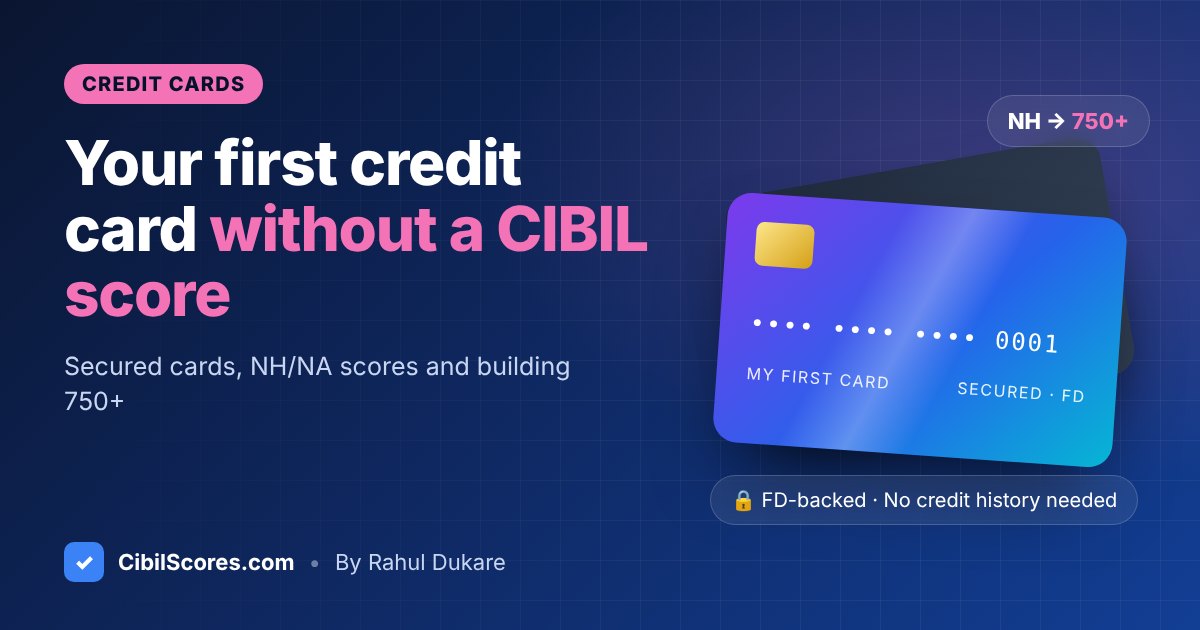
It's the classic catch-22: banks want a credit history before they give you a credit card, but you need credit to build a history. If your CIBIL report shows "NH" (no history) or "NA" (not available), or a score of -1, you're not in trouble. You're simply new to credit, and there are easy ways in.
What does a CIBIL score of NH, NA or -1 mean?
It means the bureau doesn't have enough information to calculate a score, usually because you've never had a loan or credit card, or your first account is less than about 6 months old.
This is not a bad score. Lenders treat it very differently from a low score caused by missed payments.
4 ways to get your first credit card
1. Secured credit card against a fixed deposit (easiest)
You open an FD with the bank, and it gives you a credit card with a limit linked to the FD, often around 75–90% of the deposit amount.
- Almost guaranteed approval: no income proof or credit history needed at most banks.
- Your FD keeps earning interest.
- It builds your CIBIL score: the card is reported to the bureaus like any other credit card.
- The FD is only used if you fail to pay your bill.
This is the best starting point for students, homemakers, freelancers and anyone new to credit.
2. Ask the bank where you have a salary or savings account
Your own bank already knows your income and banking behaviour. Many banks offer entry-level or pre-approved cards to existing customers even without a credit history.
3. Add-on card on a family member's account
A parent or spouse can request an add-on card for you. It's convenient, but in most cases the credit history belongs to the primary cardholder, so it may do little for your own score. Use it to learn, then get a card in your own name.
4. Entry-level or co-branded cards
Many banks have basic cards with low limits and low or no annual fees for first-time users. Approval depends on your income documents.
How to choose your first card
| What to look for | Why |
|---|---|
| Zero or low annual fee | You're building history, not chasing rewards |
| Reports to all credit bureaus | Most bank cards do; confirm with the issuer |
| Clear fees and charges | Read the Key Fact Statement and the most important terms |
| A bank you already use | Easier approval and simpler payments |
How to build a 750+ score with your first card
- Use it for small, regular spends like a phone or streaming bill.
- Pay the full amount every month, never just the minimum due. Interest on unpaid balances is very high.
- Keep your usage under 30% of the limit. On a ₹20,000 limit, try to stay under ₹6,000.
- Set up auto-pay so you never miss a due date.
- Don't apply for several cards at once. Wait at least 6 months between applications.
- Check your report after 6 months. You should see a score appear. Learn how to check your CIBIL score free.
Under RBI's revised reporting rules, effective July 1, 2026, lenders report to the bureaus every week, so your new card's payment history starts showing up on your report quickly.
Mistakes first-time cardholders make
- Treating the credit limit as extra income
- Paying only the minimum due and getting stuck with interest
- Withdrawing cash on a credit card (high fees and interest from day one)
- Closing the card after a year. Keeping your oldest card open helps your credit history length.
Frequently asked questions
Can a student get a credit card without income? Usually through a secured card against an FD, or an add-on card on a parent's account.
How long does it take to get a CIBIL score after my first card? Typically about 6 months of activity before a score is generated. Pay on time from day one.
Will a secured credit card hurt my score? No. It builds your score the same way as a regular card if you pay on time and keep usage low. Read our 10 ways to improve your CIBIL score for more.
This article is general information, not financial advice. Card features and eligibility vary by bank; check current terms before applying.