CIBIL Score for Home Loan: Minimum Score & How It Affects EMI
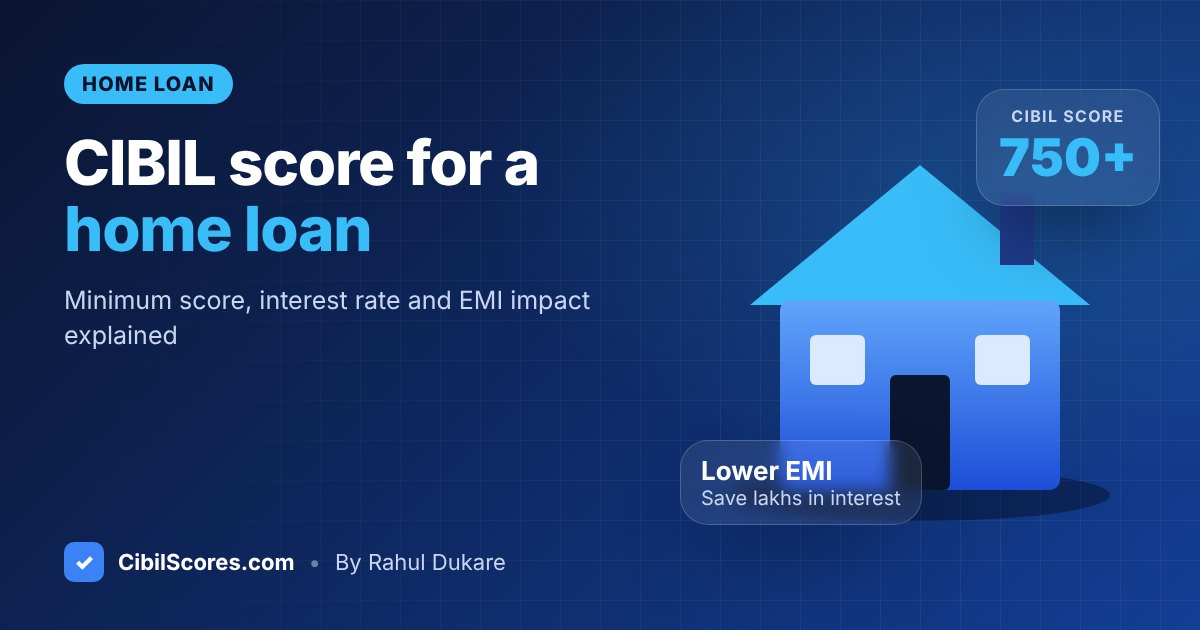
A home loan is the biggest loan most of us will ever take, and your CIBIL score decides two things: whether you get approved, and how much interest you pay for the next 20 years. A difference of even half a percent in the rate can add up to several lakh rupees.
Here's what score you need, how it changes your EMI, and how to improve your chances before you apply.
What is the minimum CIBIL score for a home loan?
There is no fixed legal minimum, and each bank and housing finance company sets its own rules. In general:
| CIBIL score | Home loan outlook |
|---|---|
| 750 and above | Easiest approval and access to the lowest advertised rates |
| 700–749 | Approval is likely; the rate may be slightly higher |
| 650–699 | Possible, but expect a higher rate, lower loan amount or extra conditions |
| Below 650 | Many lenders decline; a co-applicant or a bigger down payment helps |
Because a home loan is secured by the property, lenders can be more flexible than with personal loans. But your score still has a big effect on the rate you're offered.
How your CIBIL score changes your interest rate
Many banks and housing finance companies use risk-based pricing: borrowers with higher scores are offered lower interest rates. Banks such as SBI have linked home loan pricing to credit scores for several years. The exact rate bands change often, so always check the lender's current rate card.
Example: what a higher rate really costs
Here is a ₹40 lakh home loan over 20 years at three illustrative interest rates:
| Interest rate | Monthly EMI | Total interest over 20 years |
|---|---|---|
| 7.50% | ₹32,224 | ₹37.3 lakh |
| 8.25% | ₹34,083 | ₹41.8 lakh |
| 9.00% | ₹35,989 | ₹46.4 lakh |
Moving from 9.00% to 7.50% saves about ₹3,765 a month and over ₹9 lakh in interest over the loan's life. That's why improving your score before applying is worth the effort.
Rates in this example are for illustration only and are not offers from any lender.
What else lenders check besides your score
- Income and job stability. Salaried applicants usually need payslips, Form 16 and bank statements; self-employed applicants need ITRs and business proof.
- FOIR (fixed obligations to income ratio). Your total EMIs, including the new home loan, should usually stay within about 40–50% of your monthly income.
- Loan-to-value (LTV). RBI caps how much of the property value a bank can lend, so you'll need a down payment, usually at least 10–25% depending on the loan size.
- Property documents. The title, approvals and builder's track record must check out.
- Age and loan tenure. Lenders prefer the loan to end before you retire.
8 tips to get your home loan approved at a better rate
- Check your free credit report 3–6 months before applying. Get it from all four bureaus; see how to check your CIBIL score free.
- Fix errors early. Disputes can take up to 30 days. Our CIBIL report guide shows how.
- Pay credit card balances down below 30% of the limit before you apply.
- Close small loans like consumer durable or BNPL loans if you can. It reduces your FOIR.
- Don't apply for new cards or loans in the months before a home loan application.
- Add a co-applicant with a good score and income, such as your spouse. It can raise your eligible amount.
- Make a larger down payment. A lower LTV means less risk for the lender and sometimes a better rate.
- Compare at least 3 lenders and negotiate. Ask how your score affects the rate you're offered.
Your score now updates faster
Under RBI's revised credit reporting rules, effective July 1, 2026, lenders report your credit data to the bureaus every week. If you pay down a card or clear an overdue amount, it can reflect on your report within a week or two, which helps if you're about to apply.
Frequently asked questions
Can I get a home loan with a CIBIL score of 650? Some lenders may approve it, often at a higher rate or a lower amount. A co-applicant with a strong score or a bigger down payment improves your chances.
Does a home loan improve my CIBIL score? Yes, if you pay every EMI on time. A long, well-managed secured loan is one of the best things for your credit history.
What CIBIL score do SBI, HDFC Bank and ICICI Bank want for a home loan? Banks don't publish one fixed number, but 750+ generally gets the best terms. See our guides for SBI, HDFC Bank, ICICI Bank and all other banks.
This article is general information, not financial advice. Interest rates and eligibility rules change; confirm current terms with the lender.